Life in an Ama Village | Osatsu's Fisherman's Inns
Updated: Sep 29
By Mio Ieda
Local in Toba
Experiencing the Life of Fishermen and Ama in the Fishing Village of Osatsu
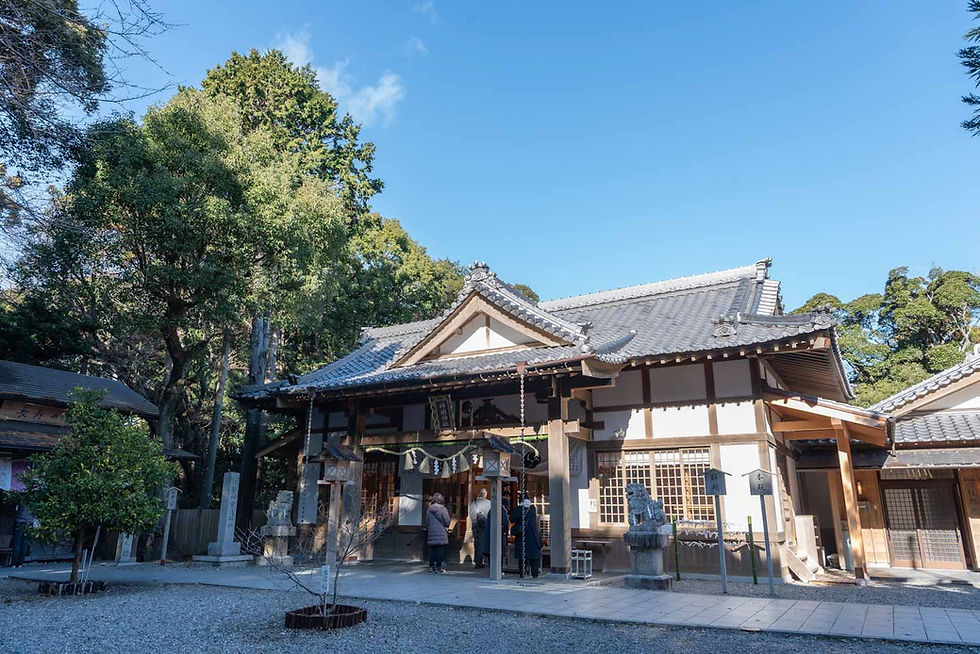
In Osatsu, Toba City—a town where fishing remains the primary industry and home to many active fishermen and Ama (traditional skin divers)—ancient customs and traditions praying for maritime safety and abundant catches are still woven into daily life. Furthermore, these fishermen and Ama are incredibly hardworking, often juggling multiple roles such as tending to fields, running restaurants, or managing traditional inns (ryokan). We took a look at the unique lifestyle that can only be found in such a dedicated fishing community.
Deep Devotion: Praying in a Profession Bound to Danger
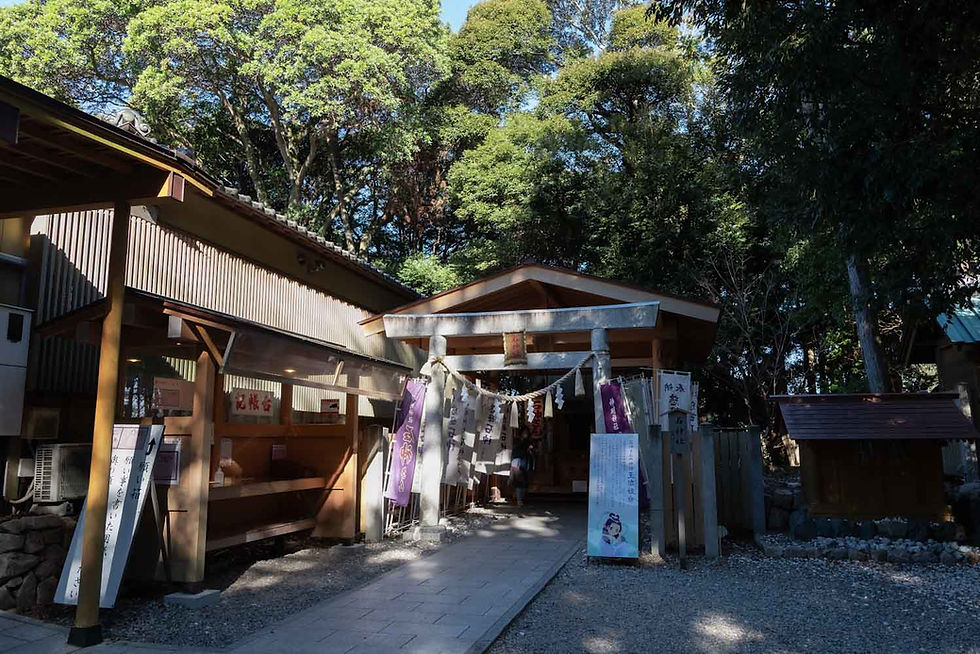
Osatsu, located on the southern side of Toba City, is a town of fishing and tourism. It is lined with numerous inns and guesthouses, and boasts the largest number of active Ama divers in Japan. Because both fishermen and Ama work in the harsh environment of the sea, their gratitude toward the ocean and their prayers for safety and bountiful harvests remain profoundly strong today. We spoke with Reverend Kiyohiro Ota, the chief priest of Shinmei Shrine—the local guardian deity—about the customs unique to Osatsu.

"There are various rituals and traditions," he explains. "Every July 31st, a ceremony called 'Hama-kito' is held at Shinmei Shrine and Otsuna-no-hama beach next to the Osatsu fishing port to pray for maritime safety. Also, three times a year on January 25th, September 25th, and November 25th, we have 'Iso-iwai' (also known as 'Iso-himachi'). On these days, the Ama take a break from diving and visit the shrine in groups based on their 'kamado' (traditional huts). There is also a tradition called 'Shio-himachi,' where if an accident occurs at sea, fishing is halted, and everyone visits the shrine to reset their luck."
At the "Ishigami-san Spring Festival," which began about 20 years ago and is held on May 7th, rituals are performed to pray for safety and a great catch. This day is observed as a rest day for the Ama; instead, the men take over the cooking duties to host and entertain the women. From the "Hatsu-mojiki" ceremony on January 16th at Chofuku-ji Temple to the "Tsukinami-mairi" (monthly first-day visit) to Shinmei Shrine, these divers and fishermen pray fervently to the gods precisely because their work constantly sits side-by-side with danger.

This deep faith is visible even in everyday life. On the wooden charms attached to the sacred shimenawa ropes at front doors, you can find the words "Somin Shorai" to protect the family from disaster. On the back, phrases like "Kyu-kyu-nyo-ritsuryo" (an incantation for exorcism) or the "Seiman-Doman" symbols for protection and warding off evil are inscribed. The "Seiman-Doman" patterns are particularly famous as marks that Ama embroider onto their hand towels and gear to ensure safety in the water.
Meeting an Active Ama: A Glimpse into Daily Life

Ayami Nakada of "Nakashin Shoten," located near the approach to Shinmei Shrine, is a powerful woman who balances many roles: raising five children, diving as an Ama, running a shop, creating accessories, and serving as the landlady of a guesthouse. She shared a glimpse of her typical routine with us.
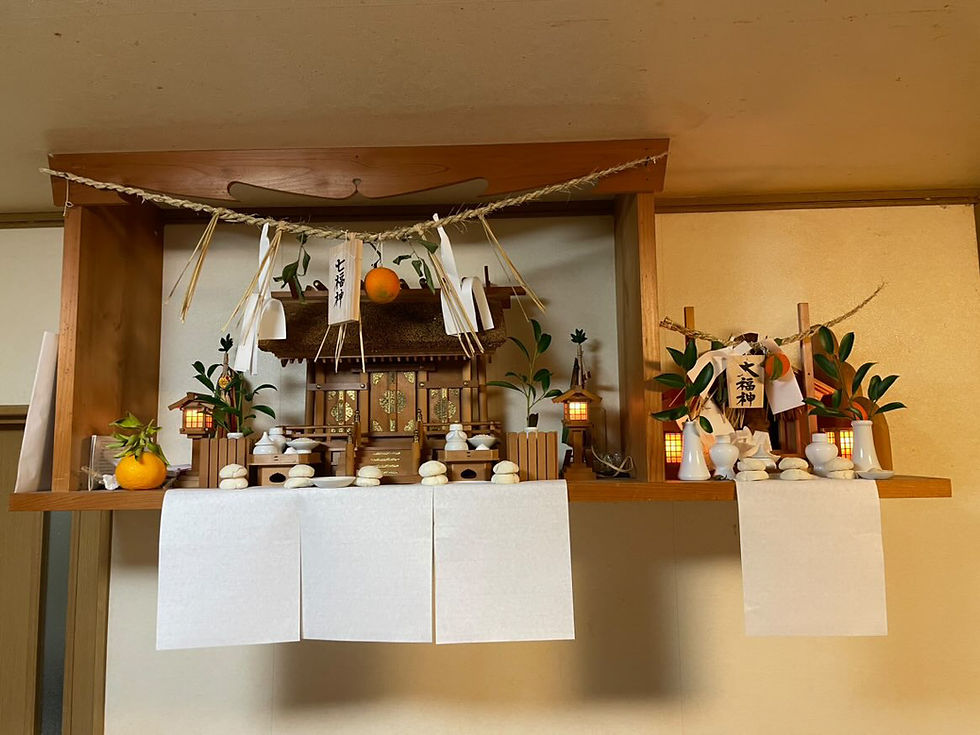
Looking at her home's altar, we noticed something unusual next to the standard Shinto altar (kamidana). "In each household, next to the general altar, there is a second one called 'Ebisu-san' dedicated to Ebisu and Daikoku (deities of wealth and fortune). Some people also enshrine charms received from Mt. Aonomine," she says. It was an immediate culture shock—two altars standing side-by-side!

Nakashin Shoten sells original goods unique to a fishing town, such as straps made from baby abalone shells and earrings made from sea glass—all handmade by Nakada herself. She diligently crafts these between tending to customers at the shop.

Once her shift at the shop ends, she returns home. Having married her former classmate, Nakada is now the landlady of their guesthouse and remains busy preparing for guests. Between this, attending ceremonies as an active Ama, and participating in school events for her children, her vitality is truly impressive. When we expressed our admiration for her hard-working lifestyle, she simply smiled and said, "To me, this is just normal. I don't think of it as anything special."
Strong Bonds of Mutual Support and Encouragement
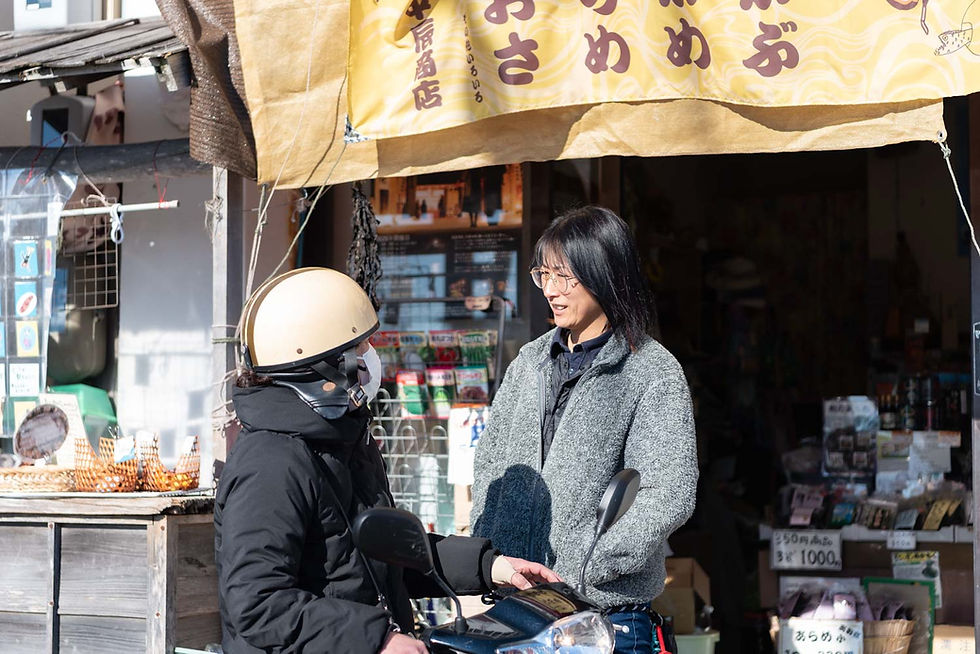
While Nakada tends the shop, fellow Ama and local acquaintances drop by one after another, making the store a hub for information. Someone might stop by to share organic lemons from their garden, while others check in on a neighbor they haven't seen lately. In this community, information travels and spreads much faster through these face-to-face interactions than on social media. Because these people coexist with a nature that is as beautiful as it is unforgiving, the bonds between neighbors who share the same experiences grow remarkably strong.


