Pearl Road Drive | Toba's Oyster Coast & Sea Views
Updated: Aug 6
By Toshio Hanatani
Local in Toba

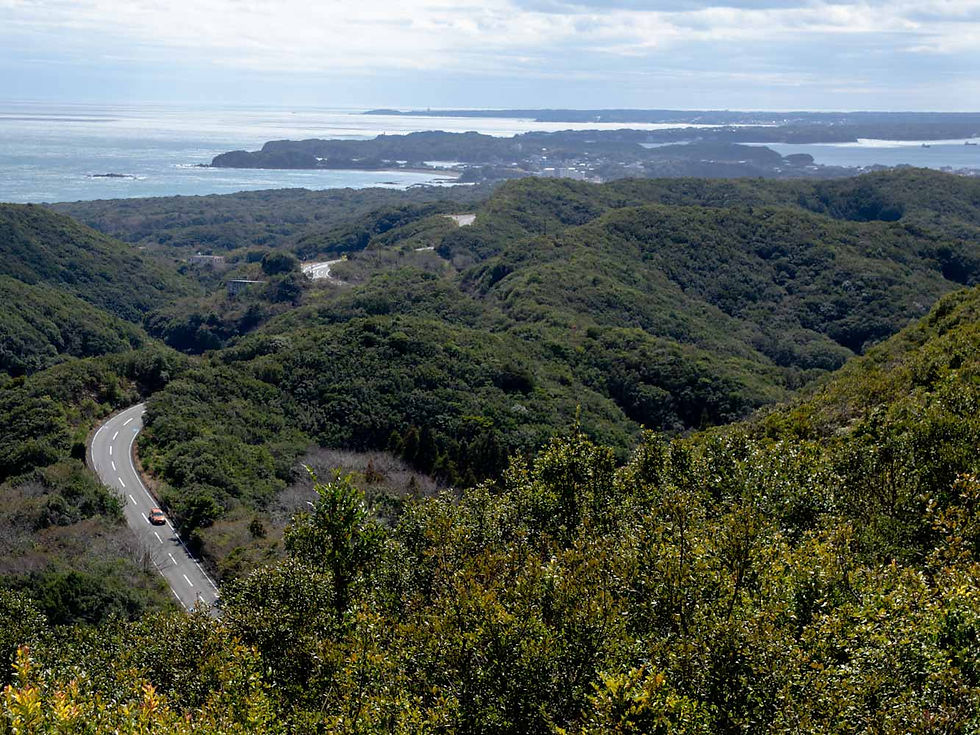
Officially known as Prefectural Route 128, the "Pearl Road" is a breathtaking 24-kilometer stretch connecting the mouth of Namura Bay in Toba to Ugata in Shima. This winding route traces the jagged rias coastline, offering dramatic elevation changes and sweeping curves that are a dream for driving enthusiasts.
The most captivating segment lies in the 10 kilometers between the Uramura district and the "Toba Observatory: Ama Terrace" (*1). This guide focuses on the must-visit spots and hidden gems tucked along this scenic passage.

Namura Bay: Where Oyster Rafts Dot the Sea
Our journey begins near the start of the Pearl Road. For motorcycle enthusiasts, a stop at Rider’s Cafe ROUTE750 (*2) is essential. True to its name, it draws riders from across Japan, but it’s more than just a pit stop—the food is remarkably authentic. From hearty fried prawn platters to decadent seafood bowls (reservation required), the menu is as impressive as the bikes parked outside.
Leaving the cafe, you’ll soon spot the "Pearl Road" sign. As the road dips, the ocean comes into view, with oyster rafts floating right at eye level. Crossing the elegant white arches of the Onoura Bridge, the sea feels close enough to touch. Beyond the bridge, the road transitions back into a forested, winding trail.
Note for international drivers: Traveling toward Shima, the Pacific will stay on your left (the passenger side in Japan).

To the Oyster Huts or Toward the Horizon?
After crossing the bridge and cresting the hill, you’ll reach a fork in the road. Turning left leads down to the Motoura district, a fishing port famous for its "oyster huts." During the winter oyster season, lines of cars and bikes head here for BBQ-style lunches. You’ll also find several oyster huts directly along the Pearl Road.
Continuing past the turnoff for the Toba Sea-Folk Museum, a parking area appears on your left. These roadside lookouts are perfect for a pause. From here, you can see the boundary between the calm Ise Bay and the vast Pacific. On a clear day, the silhouettes of Toba’s inhabited islands and Cape Irago on the Atsumi Peninsula are visible across the shipping lanes.
Ijika: A Glimpse into the Life of the Ama Divers
For those seeking a deeper cultural connection, we recommend a detour to Ijika Fishing Harbor. Follow the blue sign toward "Ijika" down a steep, narrow descent.
As you wind down the hill, the view shifts from the open Pacific on your left to the bustling harbor on your right. At the bottom, you’ll see rows of tin-roofed huts used by fishers to store their nets. Here, you might see local fishers or Ama (traditional free-divers) walking through the village. Please drive slowly and respectfully.

The coastline from Ijika to Kuzaki is the easternmost point of the Kii Peninsula, where lobster netting and Ama diving are still vibrant traditions. The crashing waves here offer a rugged, energetic contrast to the tranquil bays of Uramura.
Note: Since village roads are very narrow and public parking is scarce, it’s best to turn around after taking in the atmosphere. For small groups, the harbor has two local eateries perfect for a quiet lunch.
A Once-a-Year Celestial Spectacle
With a large free parking area for 250 vehicles, the Toba Observatory is a major hub for long-distance travelers. Drivers from Osaka heading north and those from Tokyo arriving via the Ise-wan Ferry converge here.
The facility features a cafe and gift shop, while the adjacent Hakodayama Park offers walking paths and grassy lawns. It’s a rare spot where you can enjoy "Oyster Ajillo Sandwiches" while gazing at the horizon.
True to its name, "Ama Terrace" overlooks the rocky reefs where the Ama divers have worked for centuries. To the north, you can look back at Ise Bay, and to the south, the Shima Peninsula unfolds toward Matoya Bay and Cape Daio.
There is also a special view that appears only once a year: the first sunrise. On January 1st, the gates open at 2:00 AM. If the weather permits, you can witness the sun rising from the horizon, painting the sky and sea in breathtaking shades of orange.
Go Deeper: Wildlife, including birds and small animals, often cross the Pearl Road. Please drive with caution and keep your speed moderate. At the Omoshiro Lookout south of the Toba Observatory, you will find the "Tanuki Jizo"—a small roadside shrine dedicated to the spirits of raccoon dogs (tanuki) lost in traffic accidents, serving as a poignant prayer for road safety.
Footnotes & Links:
1 Toba Observatory Ama Terrace: Closed Wednesdays (except during peak seasons). Gates open 9:00 AM – 5:00 PM. Cafe opens at 9:30 AM (Last order 4:00 PM; 3:30 PM on Tuesdays).
2 Rider’s Cafe ROUTE750: Closed Wed, Thu, Fri. Open 10:00 AM – 7:00 PM (Subject to temporary closure).
Related Link: Toba Observatory Ama Terrace https://www.toba-tenboudai.co.jp/


