Toba Sea-Folk Museum | Stories of the Sea & Its People
Updated: Aug 6
By Toshio Hanatani
Local in Toba
Fishing Gear Gathered with Memories: A Powerful Exhibition Space

The Toba Sea-Folk Museum (hereafter referred to as "Umihaku") houses approximately 60,000 items of folklore materials related to the sea. Its activities extend far beyond merely collecting and displaying artifacts; the museum has garnered attention for a diverse range of topics, including hands-on events to experience the sea and fishing industry, opportunities to hear directly from Ama divers, and its award-winning architectural design. Here, we introduce its multifaceted charm alongside the vision of its founders.
Theme: "The Sea and People" — A Father and Son’s Journey
Opened in 1971, Umihaku is a museum dedicated to passing on the culture of the sea and fishing villages. It preserves about 60,000 vintage fishing tools actually used in the coastal villages of Mie Prefecture. Comprising two exhibition halls and three storage facilities, the architectural design is highly acclaimed for its harmony with the coastal forest environment.
The founder was Enkichi Ishihara. Born in a fishing village in Shima, he became a member of the National Diet, where he promoted the fishing industry, improved fishing ports, and contributed to enacting laws for the protection of marine products. He was a spirited politician who encouraged fishermen and denounced sea pollution caused by industrial wastewater. He is often respectfully referred to as Enkichi "Ou" (venerable elder).
In his later years, he invested his personal fortune to establish Umihaku, entrusting the preparation and vision to his eldest son, Yoshitaka Ishihara. Yoshitaka later succeeded Enkichi as the second director of the museum, and even after his passing, he is still affectionately called "The Director" by many. The deep devotion of these two men to the relationship between "The Sea and People" serves as the museum's foundation.
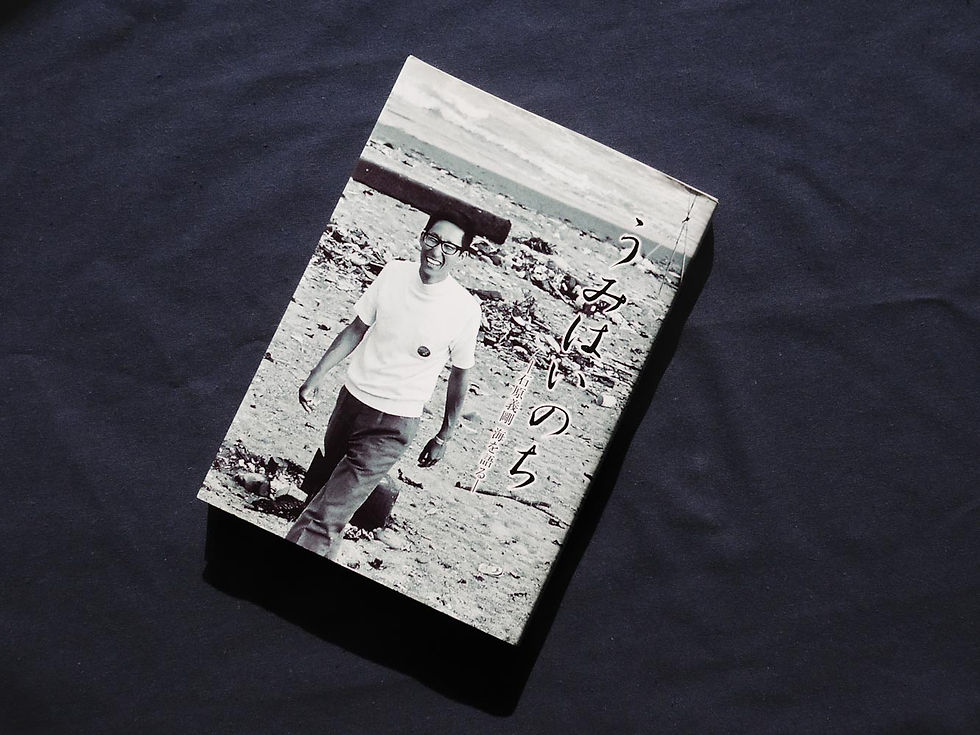
From Collecting Fishing Gear to Environmental Issues and Empowering Ama
The process of traveling to fishing villages in search of gear, observing the state of the sea firsthand, and building connections with local communities led to activities beyond traditional exhibitions.
One such initiative was the "SOS Movement," which advocated for marine environmental protection. When the museum opened in the 1970s, Japan was at the end of its high-growth period, and pollution from oil leaking from ship engines and dirty industrial wastewater was a serious social issue.
Even after the major pollution subsided, the movement continued. In light of new challenges like climate change and the loss of seaweed beds, the museum sent a message re-evaluating the value of traditional fishing—which, though less efficient, does not pollute the sea or overharvest resources. From this perspective, the "Ama" (female divers who dive to catch abalone and seaweed) began to attract significant interest.
While this region has the largest number of Ama in Japan, they face a crisis due to an aging population, a lack of successors, and a decline in abalone, their primary source of income. Umihaku has conducted extensive research on Ama and enriched its collection, displaying items such as the underwater tools they use and boats equipped with pulleys for life-ropes. Visitors can actually step inside a reconstructed "Ama-goya" (Ama hut) made of straw.
In recent years, the museum has also held events where active Ama divers are invited to speak to visitors with their favorite tools in hand, as well as lectures for schools. This project was spearheaded by Mai Ishihara, Yoshitaka’s second daughter. "It conveys the reality much more powerfully than us simply showing an exhibit and talking about it," she says of the project's significance.
Ms. Ishihara herself has frequently visited fishing villages. Although she felt some anxiety when she first quit her previous job to join Umihaku, she was immediately accepted by locals who would say, "Oh, you're the Director's daughter." "The fact that my father spent so much time visiting fishing villages certainly became the foundation for our current diverse activities," she reflects.
The current director, Taizo Hiraga, who has been a staff member since the early days, recalls Yoshitaka Ishihara’s teachings: "His constant refrains to me were, 'It’s no good just collecting old things,' 'Walk the actual sites (fishing villages),' and 'Meet many different people.'" (From Umi wa Inochi – Ishihara Yoshitaka, Talking about the Sea).

Architecture Pursuing Rationality and the "Beauty" of Handmade Fishing Gear
Finally, let us touch upon the "beauty" of Umihaku.
Designed by the renowned architect Hiroshi Naito, the architectural design of Umihaku has received extremely high praise, including the Architectural Institute of Japan Prize, considered the highest peak of domestic architecture. Recently, the museum’s social media has seen an increase in followers from the architectural community.
The current museum was newly built and relocated after the old building became too small after 20 years. For the relocation, Yoshitaka Ishihara sought a site high enough to avoid tsunamis even near the sea, and a structure that could preserve materials for a long time without damage from sea breezes, leaks, or humidity.
In addition to these conditions, Mr. Naito stated in an interview at the time of completion that he pursued "authenticity" while considering cost reduction and functionality. The result in 1991 was a complex consisting of two wooden exhibition halls and three concrete storage buildings, all with tiled roofs.
Regarding the eye-catching structure of the vaulted ceilings in the exhibition halls, Mr. Naito revealed, "The hint for that structure was the skeleton of a snake I saw at the Smithsonian Museum in America, which I visited with the Director." (From the magazine Ise Shima No. 72, published by Ise Shima Editorial Office). "When you push rationality to its limit, it sometimes starts to resemble a living organism," he added.
Shifting from architecture, in the past few years, Mai Ishihara has taken charge of inviting artists for special exhibitions, challenging the museum to present fishing gear and documentary photographs as art. "There was an exhibition planned by my father where a museum curator organized the display. Seeing the fishing gear lined up like works of art, I truly felt they were beautiful—handmade by fishermen who had thought deeply about 'how to catch as much as possible,'" she says.
Building on the founders' vision and connecting with various people beyond the fishing community, Umihaku continues to evolve. Please come and experience it for yourself.

Go Deeper: In addition to its 60,000 artifacts, Umihaku possesses a vast number of photographs related to the fishing industry. While most are not on public display, they are occasionally shown in special temporary exhibitions.
Related Link: Toba Sea-Folk Museum http://www.umihaku.com/


